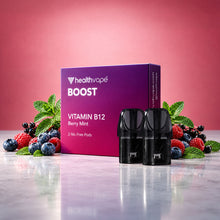
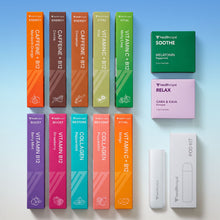
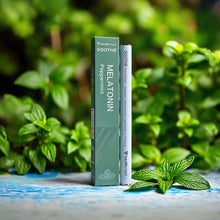


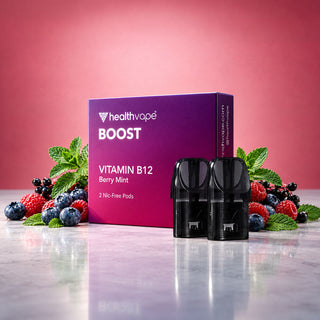


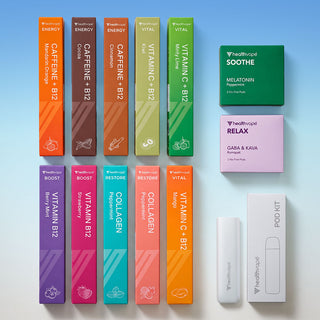

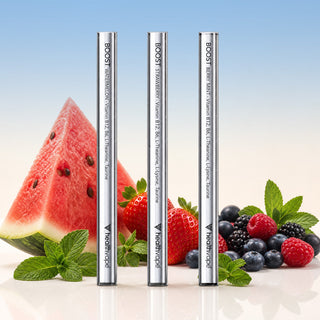

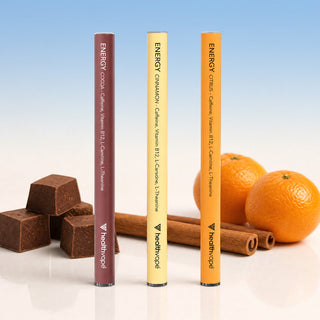

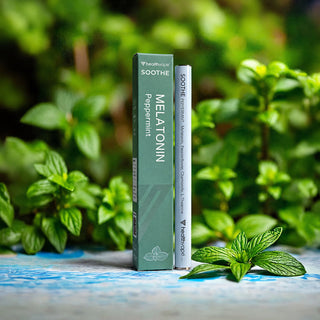


Search "melatonin inhaler" and you get results titled "melatonin vape." Search "herbal diffuser pen" and you get results titled "herbal vape." Four companies selling near-identical objects call them four different things, and the phrasing on the box tells you more about the company's legal anxiety than about the product.
This is a genuinely confusing corner of shopping, so here is what each word actually means, who uses which, and which distinctions are real.
"Inhaler" has a legal meaning, and this category is borrowing it
Start with the one that matters. In the United States, an inhaler in the regulatory sense is a drug-delivery device: albuterol, fluticasone, epinephrine. Those products are FDA-approved, prescribed or OTC-authorised, with a defined dose per actuation, stability testing, and a label that tells you exactly how many micrograms you get.
Nothing in the nicotine-free wellness category is that. When a brand writes "melatonin inhaler," it is using a consumer word for a shape, not making a regulatory statement — and none of these products are approved to treat anything.
Why do brands reach for it anyway? Two reasons, and only one is about you: 1. It is what customers type. People searching for a melatonin product they breathe do not naturally type "vape." 2. It sounds clinical, and clinical sounds safe. That is the part worth being sceptical about. A word borrowed from asthma medicine does not confer asthma-medicine standards.
"Diffuser" is the wellness word
Diffuser comes over from aromatherapy — the reed and ultrasonic diffusers that scent a room. Applied to a pen, it signals "botanical, gentle, not a smoking product." It is the term MELO Air uses across its product line ("MELO Plus melatonin diffuser"), and the one our own team drifts toward internally.
It is also the least precise of the four. A room diffuser and a pocket pen do completely different things; the only thing they share is a marketing register.
"Vape" is the accurate word, and the one everyone is running from
Here is the uncomfortable bit. Of the words in play, vape is the most technically honest for any of these products that heat a liquid into an aerosol you inhale. That is what vaping is. Whether the liquid contains nicotine, melatonin, or nothing but glycerin and flavor, the physical process is the same.
Brands avoid it because the word carries nicotine's baggage, because ad platforms and payment processors screen for it, and because "vape" is the thing a lot of customers are specifically trying to leave behind. Our own domain is healthvape.com, so we are hardly neutral here — we cannot run from the word even if we wanted to.
The rule of thumb: if it has a battery and produces visible vapor, it is a vape, whatever the packaging says. If it produces no vapor — like Füm's wooden cores, which are just infused air — it genuinely is not, and that distinction is real rather than cosmetic.
"Pen" is about shape, and nothing else
Pen describes the form factor: slim, pocket, disposable-or-refillable. It carries no information about contents. "Anxiety pen," "energy pen," "melatonin pen" are all customer-coined names for shape plus intended moment.
So which distinctions are actually real?
Strip out the marketing and there are only three questions that change what you are buying:
| Real question | Why it matters |
|---|---|
| Does it produce vapor, or only flavored air? | The single biggest difference in the category. Vapor means aerosolised glycerin in your lungs; flavored air does not. |
| Disposable or refillable? | Cost per month and how many batteries you throw away. |
| What is in it, and in what amount? | The only ingredient information worth anything is a named ingredient with a number next to it. |
Everything else — inhaler, diffuser, pen, vape — is vocabulary.
The melatonin question people actually want answered
Since "melatonin inhaler" is the most-searched version of this phrasing, the honest answer to the implied question:
Melatonin has a real, well-studied literature taken orally. Timing, dose ranges, effects on sleep onset — that work exists, in pills and gummies.
For inhaled melatonin, it does not. There is no published pharmacokinetic data telling anyone how much melatonin reaches circulation from a puff, or how quickly. Any brand quoting you an onset time — "fall asleep fast," "absorbed directly into your bloodstream" — is extrapolating from the oral research onto a route it was never measured on. We flagged the same thing in our melatonin inhaler vs. gummies comparison, and it remains the most important sentence anyone can tell you about this product category.
We are not going to pretend we are an exception. Our melatonin pens contain melatonin. That is the whole of what we can tell you with confidence, and if a competitor is telling you considerably more, that is a claim, not a finding.
How to search for this stuff without going in circles
If you already know what you want, the vocabulary translation is short:
- Want no vapor at all? Search "flavored air" — that is Füm's category, and it's the only truly distinct one.
- Want a refillable pod system? Search "pod" or "rechargeable kit," not "inhaler."
- Want the cheapest single unit? Search "disposable" plus the ingredient.
- Want a specific ingredient? Search the ingredient plus any of the four words; you will land in the same handful of stores regardless.
Our own range is spread across the same vocabulary: melatonin and chamomile for evening, caffeine for the other end of the day, and the HV0 rechargeable device at $29.99 if you would rather refill than replace.
Short version
"Inhaler," "diffuser," "pen" and "vape" are mostly the same object with four different marketing accents. "Inhaler" borrows credibility from actual medicine; "diffuser" borrows calm from aromatherapy; "vape" is the accurate one nobody wants; "pen" describes a shape. The distinctions that change what you inhale are vapor vs. no vapor, disposable vs. refillable, and what is actually in the formula. Shop on those three.


