





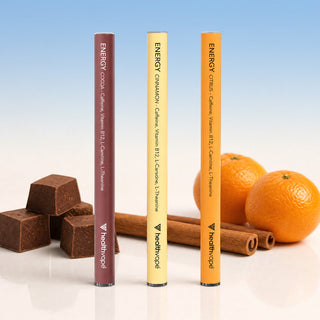

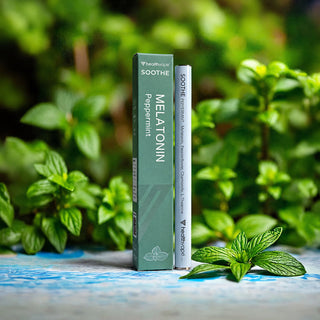


Nobody at any company sat down and coined the phrase "anxiety pen." It came from customers. Somewhere between 2021 and 2023, people started using it to describe a nicotine-free diffuser pen they kept in a pocket and reached for during a bad afternoon — and enough of them typed it into Google that the search engines built a category around it. Today thousands of people a month search "what is an anxiety pen," which is a strange thing to search for a product that, technically, does not officially exist.
So here is the plain version, including the parts the category usually leaves out.
What people mean when they say "anxiety pen"
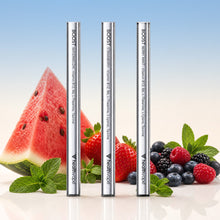
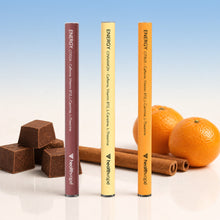
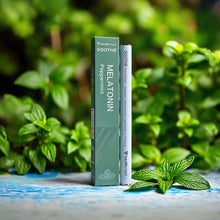
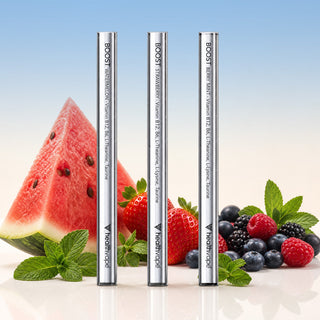
In practice, the phrase describes a small, nicotine-free inhaler or diffuser pen, usually disposable, usually flavored, often containing something like chamomile, melatonin, GABA, kava, or L-theanine. There is no regulatory category called "anxiety pen." There is no standard for what one has to contain. It is a customer-invented shorthand for a format — pocket-sized, breath-activated, no nicotine — that people happen to reach for at stressful moments.
That matters, because it means two products both marketed as "anxiety pens" can have almost nothing in common: different ingredients, different concentrations, different device quality, wildly different price. The name tells you about the moment somebody uses it, not the contents.
The part everyone skips: nobody has studied inhaled versions of these ingredients
We are going to be blunt here, because it is the single most useful thing in this article.
Chamomile, L-theanine, valerian and melatonin have all been studied — when swallowed. There is a real literature on oral melatonin and sleep timing, on L-theanine and subjective calm, on chamomile extract in capsule form. Those studies used pills and teas at measured doses.
They do not tell you what happens when the same ingredient is inhaled. Absorption route, dose delivered per puff, and how much of a compound survives aerosolization are all different questions, and for these specific ingredients in these specific devices, the published data does not exist. Any brand that quotes you an onset time for inhaled melatonin — "works in 30 seconds," "hits your bloodstream instantly" — is describing a marketing hunch, not a measurement. We would rather say that out loud than let you find out later.
So: what does have evidence behind it?
The breathing, oddly enough, is the best-studied part
The one component of the anxiety-pen ritual with a genuine research base is the thing the device does not contain: slow, deliberate breathing.
- A 2024 meta-analysis in Mindfulness pooled 31 studies (n = 1,133) on slow-paced breathing and found consistent effects on cardiovascular and emotional measures across the literature. (Springer, 2024)
- A 2024 randomised controlled trial in Annals of Neurosciences tested slow breathing exercises against standard care in patients with anxiety disorder, measuring heart-rate variability and baroreflex sensitivity — hard physiological endpoints, not self-report. (Kavitha et al., 2024)
- Older work established the mechanism: slowing respiration to roughly 6–8 breaths per minute shifts cardiac parasympathetic response, which is why "breathe out longer than you breathe in" survives as advice from ER nurses to yoga teachers. (PubMed, 1996)
- Researchers are still refining it. A 2026 study compared 0.1 Hz breathing (six breaths a minute) with super-slow 0.05 Hz breathing and found the two produce distinct cardiac and affective responses — slower is not automatically better. (PubMed, 2026)
None of that research involved a pen. It involved people breathing slowly. But it is the honest explanation for why the format caught on: a draw on a diffuser pen is a three-to-five second inhale followed by a long exhale, repeated a handful of times. It is a paced-breathing exercise with a flavor attached — and, unlike an app telling you to breathe, it is a thing you can do at your desk without announcing it to the room.
Why the hand-to-mouth part is not nothing
The second half of the honest explanation is behavioral. Hand-to-mouth fixation is a documented phenomenon in the habit literature, and it is the explicit design principle behind an entire product category — Füm, for example, builds a battery-free wooden device around exactly that idea and says so openly on its homepage. Whether you use a diffuser pen, a straw, gum, or a pen cap, the repeated gesture is doing work that has nothing to do with what you inhale.
That is not a claim that any product treats anxiety. It is the opposite: it is the reason two people can have completely different experiences with the same device.
How to read an anxiety-pen product page
A short field guide, applicable to anyone's product including ours:
- Does it list ingredients and amounts, or just adjectives? "Calming blend" is not an ingredient list.
- Does it promise an outcome? Phrases like "instant stress relief" and "fall asleep fast" are claims no company in this category can substantiate for an inhaled product. Treat them as a red flag about the brand, not a feature of the product.
- Is it actually nicotine-free, and does it say so specifically? "0% nic" should appear plainly, not in a footnote.
- What is the cost per use? Disposables in this category run roughly $17–$20 each. A refillable device with pods is usually cheaper over a month, and produces less waste.
- Is there third-party testing, and testing for what? "Lab tested" with no named lab or panel is decoration.
What we make, stated plainly
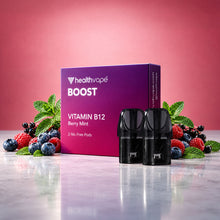
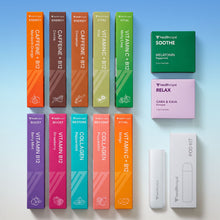
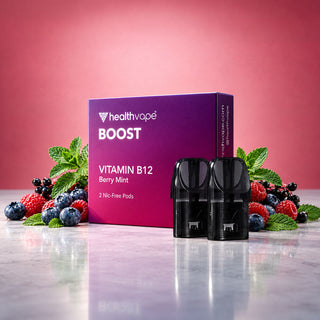
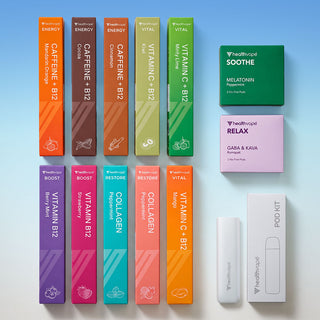
HealthVape makes nicotine-free diffuser pens and pods. Our chamomile pens contain chamomile; our melatonin pens contain melatonin; the pods range includes GABA + kava and L-theanine formulas for the HV0 rechargeable device. Pens are $19.99 each; the rechargeable kit is $29.99 and pods are $24.99 for two.
We are not going to tell you what any of that will do to your nervous system, because we do not have the data to tell you that and neither does anyone else selling one. What we can tell you is what is in it, what it costs, and that there is no nicotine in it.
If you are dealing with anxiety in any clinical sense, the thing that helps is a doctor, not a pen. That is also true, and also worth saying.
The short version
An "anxiety pen" is a customer-coined name for a nicotine-free diffuser pen. The ingredients inside have evidence behind them in oral form and effectively none in inhaled form. The breathing pattern the format encourages is the best-evidenced part of the whole experience, and it is free. Buy accordingly, and be suspicious of anyone in this category — us included — who tells you more than that.


