












You don't miss the nicotine as much as you think. What you actually miss is the movement — the reach, the inhale, the exhale, the pause. The thing your hands were doing. The thing your mouth was doing. The two-minute break from everything else.
That's the habit. And it's separate from the chemical.
Most people who try to change a routine focus on willpower. Stop doing the thing. White-knuckle through it. But decades of behavioral psychology research say the same thing: willpower alone has a terrible track record. What actually works is replacement — swapping the old behavior for a new one that scratches the same itch.
Here's why some replacements stick and others don't.
The Habit Loop: Why You Do What You Do
In the 1990s, researchers at MIT mapped out what they called the "habit loop" — a three-part cycle that drives nearly every automatic behavior:
- Cue — the trigger that starts the behavior (stress, boredom, finishing a meal, seeing someone else do it)
- Routine — the behavior itself (reaching for a cigarette, picking up a vape, grabbing a snack)
- Reward — the payoff your brain registers (a moment of calm, a sensory experience, a break from work)
The key insight: your brain doesn't care much about the specific routine. It cares about the cue and the reward. If a new routine delivers a similar reward in response to the same cue, your brain will accept the swap.
This is why "just stop" rarely works. You're trying to delete a loop that your brain has wired in through hundreds or thousands of repetitions. It's easier — and more effective — to redirect it.
What Your Brain Is Actually Looking For
When researchers study habit replacement, they find that successful swaps share a few things in common. The new behavior needs to satisfy the same underlying need the old one did.
For hand-to-mouth habits specifically, those needs usually fall into a few buckets:
| Underlying Need | What It Feels Like | Why It Matters |
|---|---|---|
| Oral stimulation | Something in or near your mouth | The physical sensation is deeply wired — it's one of the earliest self-soothing behaviors humans develop |
| Hand occupation | Something to hold, fidget with, or manipulate | Idle hands amplify restlessness and make cravings feel louder |
| Ritual / routine | A repeatable sequence with a beginning, middle, and end | The predictability itself is soothing — your brain likes patterns |
| Sensory feedback | Taste, smell, temperature, visual cue (like vapor) | Multi-sensory experiences register as more "real" and satisfying to the brain |
| Social permission to pause | A reason to step outside, take a break, reset | Many habits are secretly break-taking rituals disguised as substance use |
A replacement that hits one of these needs might help. A replacement that hits three or four of them is significantly more likely to stick.
Why Oral Fixation Is Its Own Thing
Oral fixation isn't just a Freudian buzzword. It's a real behavioral pattern — and it's remarkably common.
Humans develop oral self-soothing behaviors in infancy. Thumb-sucking, pacifiers, chewing on objects — these aren't random. The mouth is one of the most nerve-dense areas of the body, and oral stimulation activates the parasympathetic nervous system (the "rest and digest" branch).
For adults, that wiring doesn't disappear. It just gets redirected. Chewing gum. Biting pen caps. Snacking when you're not hungry. Smoking. Vaping. These are all, at some level, adult versions of the same self-soothing mechanism.
That's why when people drop one oral habit, they often pick up another. It's not weakness — it's neurology. The need for oral stimulation is real, and it doesn't go away just because you decided to stop one specific behavior.
Effective oral fixation alternatives acknowledge this. They don't try to eliminate the need — they give it somewhere better to go.
The Landscape: What People Actually Use
If you look at what people reach for when they're trying to replace a hand-to-mouth habit, the options fall into a few categories:
| Category | Examples | What It Satisfies |
|---|---|---|
| Chewing / crunching | Gum, sunflower seeds, toothpicks, hard candy | Oral stimulation, jaw movement, taste |
| Fidget objects | Stress balls, fidget spinners, worry stones, pen clicking | Hand occupation only — no oral component |
| Breathing tools | Flavored air devices, essential oil inhalers, aromatherapy sticks | Inhale/exhale ritual, oral stimulation, sensory feedback, hand occupation |
| Snacking | Carrots, jerky, mints, crunchy snacks | Oral stimulation, taste — but can create new unwanted habits |
| Beverages | Tea, flavored water, sparkling water, coffee | Oral stimulation, ritual, taste — limited portability |
| Behavioral tools | Deep breathing apps, meditation, rubber band technique | Addresses the psychological cue — but no physical/oral component |
Notice the pattern: the more needs a replacement satisfies simultaneously, the more closely it mimics the original habit loop. Chewing gum covers oral stimulation but doesn't give you the inhale-exhale ritual. A stress ball keeps your hands busy but does nothing for the mouth. Deep breathing covers the respiratory pattern but has no physical object, no flavor, no sensory anchor.
The replacements people report sticking with longest tend to be the ones that cover the most categories at once.
The Five Traits of Replacements That Actually Stick
Based on behavioral research and real-world data from people who've successfully changed habits, here's what separates replacements that last from ones that get abandoned in a week:
1. It's physically similar to the old behavior
Same motion. Same posture. Same basic mechanic. If your old habit involved bringing something to your lips and inhaling, a replacement that also involves bringing something to your lips and inhaling will feel more natural than one that involves squeezing a rubber ball. Your muscle memory already knows the motion.
2. It provides immediate sensory feedback
Flavor. Temperature. A visible exhale. Some kind of real-time signal that your brain registers as "I did the thing and got the thing." Delayed feedback (like "you'll feel better in 3 weeks") doesn't satisfy the reward part of the habit loop.
3. It's accessible in the same moments
If your old habit happened on work breaks, in the car, after meals, or while socializing, the replacement needs to be available in those exact same moments. Something that only works at home won't cover the moments when cravings are strongest.
4. It doesn't create a new problem
Snacking works as an oral fixation replacement — until you've gained 15 pounds. Caffeine works until you can't sleep. The best replacements satisfy the need without introducing a new issue you'll need to solve later.
5. It has a natural stopping point
Good habits have a built-in "done" signal. A piece of gum loses its flavor. A cup of tea is empty. A breathing device delivers a set number of draws. Open-ended behaviors (like mindless snacking from a bag) tend to drift because there's no signal telling your brain the routine is complete.
The Role of Identity (This Part Matters More Than You Think)
Here's something the habit research consistently shows that most people overlook: long-term behavior change is tied to identity, not just mechanics.
When someone says "I'm trying to quit," they're still identifying as someone who does the thing but is fighting it. When someone says "I'm someone who doesn't do that anymore" — or better yet, "I'm someone who does this instead" — the shift is fundamentally different.
A replacement habit works best when it feels like a choice, not a consolation prize. "I choose to use this" hits different than "I'm using this because I can't have what I really want."
That's why the framing matters. The most successful replacements are ones people actually like — not ones they tolerate as a compromise.
What the Research Says About Timelines
You've probably heard "it takes 21 days to form a habit." That number comes from a 1960s plastic surgery book and has almost no scientific backing.
The actual research — a 2009 study from University College London — found that it takes an average of 66 days for a new behavior to become automatic. But the range was huge: 18 to 254 days, depending on the person and the behavior.
The practical takeaway: give any replacement at least two months before you judge whether it's working. The first week is novelty. The second week is when it starts feeling like effort. Weeks three through eight are where the real rewiring happens. If you're still reaching for the replacement consistently after two months, odds are good it's sticking.
One more finding worth noting: the researchers found that missing a single day didn't significantly affect long-term habit formation. Consistency matters more than perfection.
Common Questions, Straight Answers
Does it matter how similar the replacement is to the original habit?
Yes — significantly. Behavioral research consistently shows that the more physical overlap between the old routine and the new one, the easier the transition. Same motion, same context, same timing = smoother swap.
Can you use multiple replacements at once?
You can, and some people do. Gum during the day, tea in the evening, a breathing device on breaks. The risk is that none of them gets enough repetition to become automatic. Most behavior experts suggest picking one primary replacement and making it your default.
What if the replacement stops working after a few weeks?
That's common, and it usually means the replacement isn't satisfying one of the core needs (oral, sensory, ritual, break-taking). Instead of going back to the old behavior, try a replacement that hits a different combination of those needs.
Is it possible to just stop without replacing the behavior?
Possible, yes. Common, no. Research on habit change consistently shows that replacement strategies outperform pure extinction strategies. Your brain wants to do something in response to the cue — it's easier to give it something new than to give it nothing.
The Bottom Line
Habits aren't about willpower. They're about loops — cue, routine, reward — that your brain runs on autopilot. Breaking a habit isn't about deleting the loop. It's about redirecting it.
The best replacement is the one that matches the motion, satisfies the senses, fits into the same moments, and doesn't create a new problem. It should feel like something you're choosing, not something you're settling for.
Your brain doesn't care what the routine is. It cares that the reward shows up. Find a replacement that delivers, and the rest is just repetition.
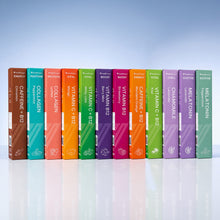
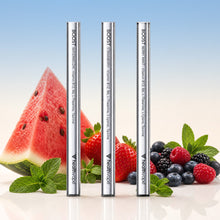
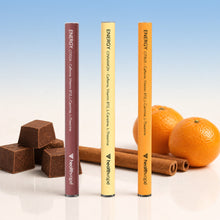
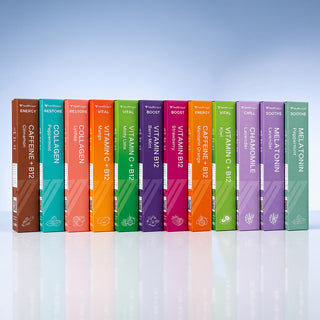
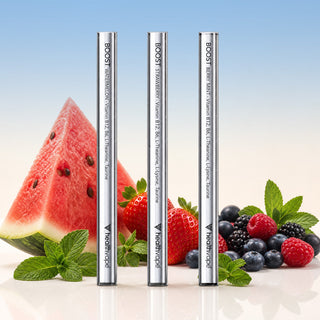
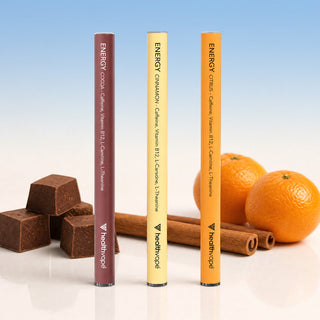
HealthVape makes nicotine-free vitamin vapes designed to fit the hand-to-mouth ritual. Explore the full lineup at healthvape.com.


