








If you've been using a nicotine device for a while and you're looking at nicotine-free options, you probably have one very practical question: what's actually different?
Not the marketing version. The real version — what changes on day one, what changes in week two, and what doesn't change at all.
Here's a straight answer, with the important caveat up front: this is general information about nicotine and about what nicotine-free devices are, not medical advice, and not a claim about what any product will do for you. If you're making changes for health reasons, talk to a doctor.
The first thing to understand: two separate things are happening
When someone uses a nicotine vape, there are two distinct loops running at the same time.
Loop one is chemical. Nicotine is a stimulant, and the body adapts to a regular supply of it. That adaptation is well documented in the research literature, and it's the reason people describe the first days without nicotine as physically noticeable.
Loop two is behavioral. The hand motion. The pause. The breath in, the breath out. Stepping outside. The thing you do at 3pm when you've been staring at a screen for four hours. That loop is about repetition and context, not chemistry.
A zero-nicotine inhaler has no nicotine in it at all, which means it doesn't touch loop one. What people tend to be looking for is something for loop two — the shape of the habit, without the nicotine.
That distinction matters for setting expectations, and it's the single most useful thing to understand before you switch.
Week one: the ritual is the part you notice
Most of the difference in the first few days is sensory.
The draw feels different. Nicotine-containing e-liquid produces a throat sensation — often called "throat hit" — that comes largely from the nicotine itself. Nicotine-free formulas don't reproduce that. Depending on what you were using, the first pull can feel softer or thinner than you expect. Most people describe it as noticeably gentler.
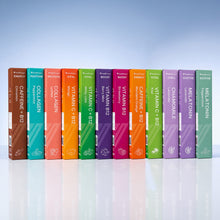
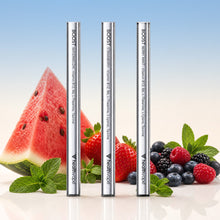
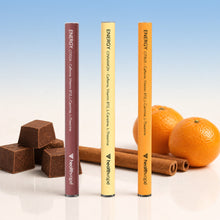
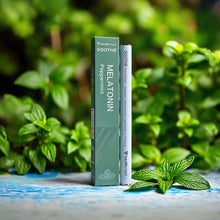
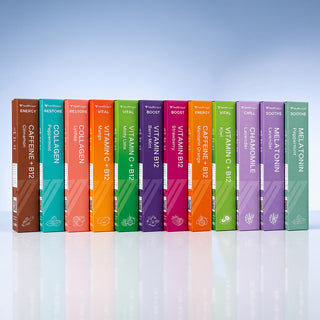
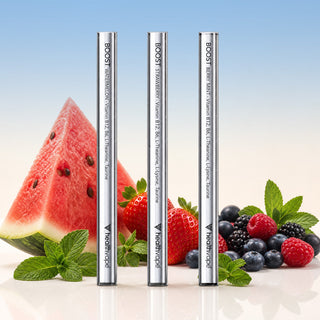
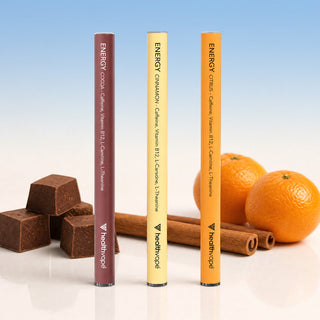
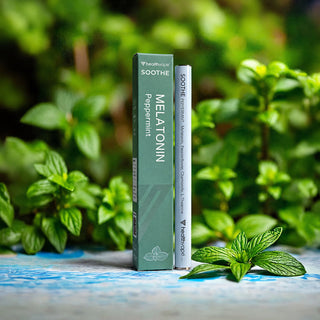
The flavor is more forward. With no nicotine sharpness in the mix, flavor becomes the dominant note. Our range leans into that — the melatonin pens come in lavender, jasmine and peppermint, and the caffeine range runs citrus, cinnamon and cocoa. If you've only ever used tobacco or mint nicotine flavors, this part is a genuine change.
There's no dosing logic. With nicotine devices, people tend to track strength: 20mg, 35mg, 50mg. That framework doesn't carry over. A nicotine-free inhaler isn't something you step down. It's just a device you use as part of a routine.
The habit itself survives intact. This surprises people. The physical loop — reach, inhale, exhale, put it down — is the same loop. That's precisely why so many people who move away from nicotine look for something with the same shape rather than nothing at all.
Weeks two to four: the routine reorganizes itself
By the second and third week, most of the reports we hear from customers are less about the device and more about when they use it.
Nicotine use tends to be clock-driven, because the body is asking on a schedule. Without nicotine, that schedule disappears — and what's left is context-driven use. After lunch. During a long drive. In the last hour before bed. On the walk between meetings.
Two practical consequences:
- Most people use it less than they expected to. With no chemical prompt, the prompt becomes the situation. Fewer situations, fewer uses.
- People start matching the formula to the moment. This is the point where our range starts to make more sense than a single all-day device. A citrus caffeine pen and a lavender melatonin pen are not interchangeable in the way two nicotine flavors are — they belong to different parts of the day.
What does not change
Being honest about this is more useful than overselling.
- It's still an inhalation device. You're still inhaling an aerosol produced from a base of vegetable glycerin and flavoring. Nicotine-free is not the same thing as consequence-free, and anyone telling you otherwise is selling you something.
- It's not a treatment, a therapy, or a cessation tool. HealthVape products are not nicotine replacement therapy and we don't position them that way. They contain no nicotine, and that's the whole claim.
- The oral and hand habit stays a habit. If your goal is to have no habit at all, a different device isn't the route there.
- Your taste memory takes a while to reset. People coming off strong mint or tobacco flavors often report that everything tastes mild for the first week or two.
What's actually in a nicotine-free inhaler
Short list, which is the point:
- A base liquid — vegetable glycerin (VG), sometimes with a small amount of propylene glycol (PG)
- Flavoring — food-grade flavor compounds
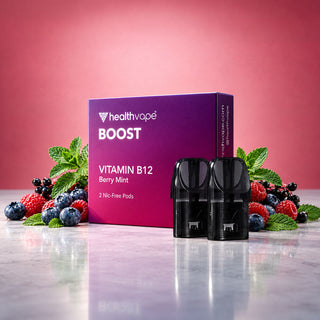
- A vitamin or herbal ingredient, depending on the formula — B12, vitamin C, caffeine, melatonin, chamomile, collagen, GABA + kava
- No nicotine. No tobacco derivatives.
For general context, separate from any product: melatonin is a naturally occurring hormone involved in the body's sleep-wake cycle; caffeine is a well-studied stimulant found in coffee, tea and cocoa; vitamin B12 is a water-soluble vitamin found in animal products and fortified foods; chamomile is a flowering herb with a long history of traditional use.
HealthVape's formulas are vitamin- and herbal-ingredient-infused pens and pods built around those ingredients and around the flavor and ritual — not around an outcome we'd promise you.
Choosing between a disposable and a rechargeable
This is the most common practical question, and it's genuinely a fork.
Disposable pens are the closest analogue to most nicotine devices. Nothing to charge, nothing to refill, one flavor per pen. If you're switching and you want the smallest possible change to your routine, start here — browse the nicotine-free disposable range.
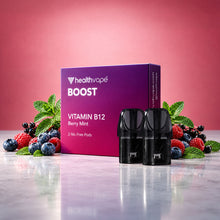
A rechargeable kit with pods costs less over time and lets you swap formulas — a caffeine pod in the morning, a chamomile pod in the evening — on one device. It's the better fit once you know which formulas you actually reach for.
Our general suggestion: start disposable, learn your pattern for a few weeks, then move to pods if you find yourself using more than one formula. You can see the full zero-nicotine lineup on the zero nicotine collection, and the broader herbal range in herbal inhalers.
The honest summary
Switching from nicotine to a nicotine-free inhaler changes the chemistry and keeps the choreography. The device in your hand looks and feels familiar; what it contains does not. If you were hoping the swap itself would handle the nicotine side of things, it won't — that's a separate piece of work, and one worth doing with a doctor if it's hard.
But if what you want is the pause, the breath and the flavor without nicotine in it, that's exactly what these are.
This article is general information, not medical advice. HealthVape products contain no nicotine and are not intended to diagnose, treat, cure or prevent any disease, and are not nicotine replacement therapy. Not for use by minors, or by people who are pregnant or nursing.


