

















Key Takeaways:
Smoking and vaping behaviors are influenced by habit, routine, sensory cues, and psychological reinforcement, not just nicotine.
Tools like the Fagerström Test for Nicotine Dependence help differentiate nicotine-driven dependence from learned behavioral patterns.
Individuals with lower nicotine dependence may find non-nicotine alternatives helpful because they replicate familiar elements (hand-to-mouth action, flavor, inhalation, social rituals).
Behavioral science suggests that changes in daily structure—such as energy management and rest patterns—can support shifts in nicotine-related habits.
Outcomes vary by individual, but understanding the behavioral and psychological components helps explain why some people explore non-nicotine options.
HealthVape’s approach focuses on offering alternatives informed by these insights, supporting people as they make changes at their own pace.
We’re always interested in hearing feedback from customers who report reducing or discontinuing their nicotine use after incorporating HealthVape products into their routines. While individual experiences vary, many customers have shared insights into how non-nicotine products may fit into broader efforts to move away from smoking or vaping.
Several customers describe how a nicotine-free vape can still replicate familiar aspects of the smoking or vaping experience. Elements such as flavorful vapor, the hand-to-mouth ritual, and oral fixation are often cited as meaningful parts of the habit. The physical act of inhaling and exhaling, along with sensory cues like taste and visible vapor, may help address conditioned behaviors associated with smoking without the presence of nicotine. Many prefer non-nicotine options that emphasize flavor and ritual, such as botanical or vitamin-based inhalables. For example, calming flavor profiles like chamomile or other herbal blends may be selected during moments associated with relaxation, while other formulations can be incorporated into daytime routines. For some, the social component of vaping, such as having something to engage with during shared moments, is also described as helping make the change feel less disruptive.


Try the BOOST B12 Berry Mint and SOOTHE Melatonin Peppermint nicotine-free pods
Although we do not promote our products as nicotine replacement therapies, we sought to better understand why some customers associate non-nicotine alternatives with changes in their smoking or vaping behavior. Research into the psychology of smoking provides helpful context for these experiences.
The Psychology of Smoking Behavior
Nicotine use and smoking behavior can be examined through a psychological and behavioral framework. One of the most widely used tools for evaluating smoking behavior is the Fagerström Tolerance Questionnaire (FTQ) and its later refinement, the Fagerström Test for Nicotine Dependence (FTND). These assessments were developed to estimate levels of physical nicotine dependence and to distinguish between smoking driven primarily by nicotine dependence and smoking maintained largely by behavioral and psychological factors.
Research indicates that smoking behavior is influenced by more than nicotine exposure alone, including genetic predisposition, behavioral traits, and psychological factors that may be present even before initial nicotine exposure.² It reflects a combination of learned habits, emotional regulation, sensitivity to reward and punishment, environmental and social cues, and individual predispositions. Importantly, smokers are not a uniform group, and variability in nicotine dependence and response to interventions has been linked to genetic and biological differences.⁴ People differ in what motivates their smoking behavior, what reinforces it, and what factors influence changes in use. For many individuals, smoking becomes closely associated with daily routines, stress responses, and social contexts, sometimes independent of nicotine’s pharmacological effects.
The FTQ and FTND assess behaviors such as time to first cigarette after waking, difficulty refraining from smoking in restricted settings, and smoking frequency. Higher scores, generally six or above, are associated with stronger nicotine dependence, while lower scores suggest that smoking may be more strongly linked to habit and psychological reinforcement. These tools have been widely used in research settings to better understand how nicotine dependence and behavioral factors interact.

Population-based surveys further support this distinction. In studies of workplace and municipal employees conducted by public health centers, relatively few participants scored in ranges associated with high nicotine dependence. In many cases, smoking appeared to be more closely related to habitual patterns and situational triggers than to strong physiological dependence. These findings highlight the importance of examining smoking behavior through both behavioral and psychological perspectives.
Taken together, research using Fagerström-based assessments suggests that when smoking behavior is primarily habitual rather than strongly nicotine-dependent, non-nicotine alternatives may address certain behavioral and sensory components of the habit. Features such as flavor, hand-to-mouth motion, inhalation and exhalation, and participation in familiar routines or social settings may contribute to perceived satisfaction without nicotine. Individual experiences vary, but this framework helps explain why some people report finding non-nicotine options compatible with their efforts to change smoking-related behaviors.
Habit Formation and Reward Learning
Building on this psychological framework, the concept of reward learning offers further insight into how smoking behaviors develop and persist. Reward learning refers to the process by which individuals associate certain actions, stimuli, or contexts with positive outcomes. When these associations are repeated over time, they can lead to habit formation. Habits are repetitive motor or cognitive behaviors triggered by internal states or external cues and often occur with minimal conscious awareness.
Nicotine influences this process by increasing dopamine activity in reinforcement and reward pathways in the brain, which may affect reward responsiveness during both use and withdrawal.³ This effect may heighten attention to smoking-related cues and increase motivation to engage in smoking behaviors. Over time, these reinforced associations can strengthen learned responses, making cues such as stress, social environments, or daily routines more likely to prompt smoking-related actions, even when physiological nicotine dependence is relatively low.
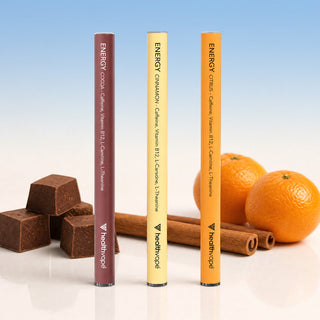
When individuals recognize the psychological components underlying their smoking behavior, particularly those related to habit and reward expectation, opportunities may arise to modify these learned patterns for the better. In some cases, alternative behaviors that replicate familiar sensory or ritual elements of smoking may help satisfy conditioned expectations without relying on nicotine. For example, some choose different non-nicotine alternatives to align with specific routines throughout the day and respond to familiar smoking-related cues. Options associated with alertness with caffeine and focus with B12, are sometimes incorporated into daytime routines as a way to create clearer distinctions between activities, supporting consistency and predictability in daily habits.
In combination with Fagerström findings, this perspective helps explain why non-nicotine alternatives are sometimes described as supportive by individuals whose smoking behavior is more strongly shaped by habit than by chemical dependence.
Nicotine Use, Sleep, and Daily Routines
Findings published in Nicotine & Tobacco Research has identified sleep disturbance as a commonly reported experience among individuals reducing or discontinuing nicotine use.¹ Overnight abstinence during sleep may also increase the perceived reward of the first cigarette of the day, reinforcing learned associations between nicotine use, alertness, and daily routines. Over time, this pattern can contribute to continued use by linking nicotine intake with both sleep disruption and morning stimulation.
From a behavioral standpoint, nicotine’s stimulating properties and its interaction with reward pathways may interfere with normal sleep–wake rhythms, particularly when nicotine use occurs later in the day. As individuals move away from nicotine, adjusting routines to better align with natural circadian patterns may help reduce reliance on nicotine-associated cues and support more consistent daily structure. Some describe incorporating non-nicotine evening cues into their nighttime routines, such as a melatonin or chamomile inhalable, as part of a broader effort to separate periods of stimulation from rest.
Based on customer feedback, the use of caffeine earlier in the day, vitamin B12 during afternoon hours, and melatonin in the evening has been described as a way to reinforce clearer boundaries between energy and relaxation without nicotine exposure. These approaches are not positioned as direct substitutes for nicotine, but rather as elements that may support routine and predictability, which are central to habit formation.
A Pattern-Based Approach to Change
Considered together, research on nicotine dependence, habit formation, reward learning, and sleep suggests that smoking and vaping behaviors are often shaped by a combination of psychological, behavioral, and environmental factors. For many individuals, routines, sensory cues, and learned reward expectations play a significant role in maintaining use. Understanding these patterns helps explain why non-nicotine alternatives and structured lifestyle adjustments may be compatible with efforts to reduce nicotine reliance for some people.
Our goal is to support individuals who are seeking to curb or move away from nicotine by offering alternatives informed by behavioral insights and routine-based change. We recognize that experiences differ and that no single approach works for everyone. While we do not make claims or guarantees regarding cessation outcomes, we are committed to providing tools that may help people explore new patterns, reinforce consistent routines, and feel supported as they navigate changes in their relationship with nicotine. We’re here to meet people where they are and hope to contribute to a more informed, flexible approach to reducing nicotine reliance over time.
-
Colrain IM, Trinder J, Swan GE. The impact of smoking cessation on objective and subjective markers of sleep: Review, synthesis, and recommendations. Nicotine & Tobacco Research. 2004;6(6):913–925.
-
Audrain-McGovern J, Nigg JT, Perkins K. Endophenotypes for nicotine dependence risk at or before initial nicotine exposure. National Cancer Institute Tobacco Control Monograph No. 20. 2009.
-
Pergadia ML et al. Association between nicotine withdrawal and reward responsiveness in humans and rats. JAMA Psychiatry. 2014;71:1238–1245.
-
Lessov-Schlaggar CN et al. Genetics of nicotine dependence and pharmacotherapy. Biochemical Pharmacology. 2008;75:178–195.
Important Disclaimer: These statements have not been evaluated by the Food and Drug Administration or any other agency. This product is not intended to diagnose, treat, cure, or prevent any disease or affect any bodily structure or function. This product should be used only as directed on the label. All trademarks and copyrights are property of their respective owners and not affiliated with nor do they endorse this product. Sale to minors is prohibited. HealthVape expressly makes no health or medical claims for this product. Don't use if you take any medication or have or suspect any medical condition. The information provided does not constitute medical advice and should not take the place of consulting a physician. This information does not and should not replace treatment from a medical professional. Information on this site is provided for informational purposes only. If you need medical advice or assistance, you should consult a physician. Consult your healthcare professional before using new products, including our products. Always carefully read all Warnings & Disclaimers for our products. There is no guarantee of specific results and results can and will vary. Limited offer. Void where restricted or prohibited. Limits & exclusions apply.


