








Caffeine vapes (also called caffeine inhalers) have become one of the most talked-about products in the nicotine-free space. And the first question everyone asks is: how do they compare to energy drinks?
Fair question. They both contain caffeine. They're both portable. They're both marketed to people who want a pick-me-up. But the similarities end there. Here's the full ingredient breakdown.
What's in a Caffeine Vape
A caffeine vape pen delivers caffeine via inhalation. The typical ingredient list is short:
- Caffeine — Anhydrous caffeine (the same form used in energy drinks, pills, and pre-workouts)
- Base liquid — Vegetable glycerin (VG), sometimes with a small amount of propylene glycol (PG)
- Flavoring — Food-grade flavor compounds (citrus, cinnamon, cocoa, etc.)
- Supporting ingredients — Some brands add B12, taurine, or other compounds
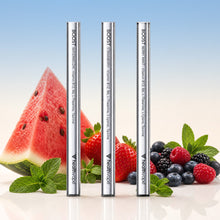
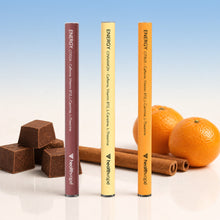
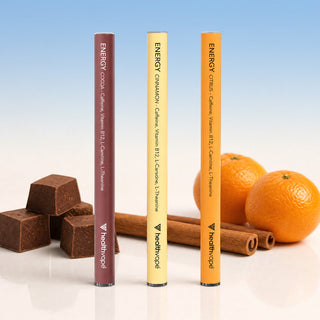
That's typically 3–5 ingredients. HealthVape's Citrus Caffeine pens, for example, combine caffeine with a citrus flavor profile. The Cocoa Caffeine version uses cocoa flavoring. Same caffeine, different taste.
What's in an Energy Drink
Energy drinks contain caffeine too — plus a lot more. Here's what you'll find on a typical label:
- Caffeine — 80–300mg per can (varies widely by brand)
- Sugar — 25–65g per can (except sugar-free versions, which use artificial sweeteners)
- Taurine — An amino acid commonly added to energy drinks
- B-vitamins — B6, B12, niacin (added to most energy drink formulas)
- Guarana — A plant extract that contains additional caffeine
- Carbonated water — The bulk of the drink
- Citric acid, preservatives, colorings — Standard beverage additives
- Sucralose/aspartame (sugar-free versions) — Artificial sweeteners
A 16oz energy drink typically contains 15–25 ingredients. A caffeine vape typically contains 3–5.
The Side-by-Side
| Factor | Caffeine Vape | Energy Drink |
|---|---|---|
| Caffeine source | Anhydrous caffeine | Caffeine + guarana (double source) |
| Caffeine per serving | Small amount per puff (you control intake) | 80–300mg per can (all at once) |
| Sugar | None | 25–65g (regular) or artificial sweeteners (sugar-free) |
| Calories | None | 110–280 (regular) or 0–10 (sugar-free) |
| Total ingredients | 3–5 | 15–25 |
| Delivery method | Inhalation (lungs) | Oral (digestive system) |
| Onset speed | Fast (inhalation) | 15–45 minutes (digestion) |
| Portion control | Puff-by-puff (self-regulated) | One can (fixed amount) |
| Portability | Fits in a pocket | 8–16oz can |
| Teeth / staining | No liquid contact with teeth | Acidic, sugary, can stain |
| Price per serving | ~$0.03–$0.05 per puff | $2–$5 per can |
The Caffeine Dose Question
This is the biggest practical difference. An energy drink gives you a fixed dose — crack open a Monster and you're getting 160mg of caffeine whether you want it all or not. A caffeine vape lets you take one puff or twenty. You control the intake.
For some people, that's a feature. You want a small boost at 2pm without committing to 160mg of caffeine and 54g of sugar? Take a few puffs. You want more? Take more.
For other people, the measured dose of an energy drink is the appeal — you know exactly how much you're getting.
Neither approach is objectively better. It depends on how you think about caffeine in your routine.
The Ingredient Simplicity Factor
If you care about ingredient lists (and increasingly, people do), the comparison is stark. A caffeine vape pen has a handful of ingredients you can pronounce. An energy drink has a paragraph of them, including dyes, preservatives, acids, and in many cases, more sugar than a candy bar.
That doesn't automatically make one "better" — but it's a real difference for people who pay attention to what they consume.
What Energy Drinks Have That Caffeine Vapes Don't
Let's be fair about it:
- Hydration — Energy drinks contain water. Caffeine vapes don't hydrate you. If you're dehydrated, a beverage helps. A vape doesn't.
- Precise dosing — The can tells you exactly how much caffeine is inside. Vape pens don't always specify per-puff amounts.
- Decades of regulatory history — Energy drinks are classified as beverages with established FDA oversight. Caffeine inhalers are newer and the regulatory framework is still evolving.
- Availability — Energy drinks are in every gas station, vending machine, and grocery store. Caffeine vapes are primarily online.
What Caffeine Vapes Have That Energy Drinks Don't
- Zero sugar, zero calories — No sugar crash, no extra calories, no artificial sweeteners
- Simpler ingredients — 3–5 ingredients vs. 15–25
- Pocket portability — Slips into a pocket, no can to carry or dispose of
- Puff-by-puff control — Microdose your caffeine intake instead of committing to a full can
- The ritual — Inhale, exhale, moment of pause. Some people find this more satisfying than drinking from a can
HealthVape's Caffeine Lineup
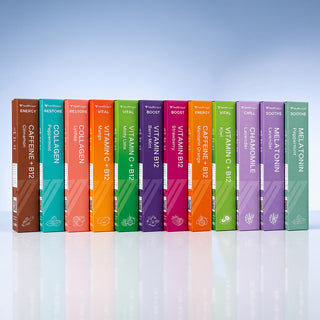
If you're curious about the caffeine vape side of the comparison, HealthVape offers three flavor options:
- Citrus Caffeine — The original. Bright, clean citrus flavor.
- Cinnamon Caffeine — Warm, spiced. Think chai latte in a pen.
- Cocoa Caffeine — Rich, chocolatey. For the coffee-and-chocolate crowd.
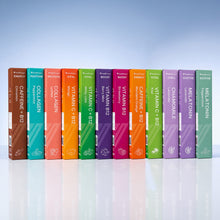
All three use the same caffeine formula — just different flavoring. There's also a Caffeine Bundle if you want to try the lineup, or browse the full caffeine vapes collection.
The Bottom Line
Energy drinks and caffeine vapes both deliver caffeine. Everything else is different — the ingredients, the delivery method, the experience, the sugar content, the portability, and the ritual.
If you want hydration with your caffeine and a precise measured dose, energy drinks do that. If you want zero sugar, simpler ingredients, and puff-by-puff control in your pocket, caffeine vapes do that.
Both exist because different people want different things. The best choice is the one that matches how you actually want to consume caffeine in your daily life. Read the label either way.


