









It's the most searched question in the nicotine-free vape space: are they safe?
The honest answer is more nuanced than most brands want to admit and more nuanced than most headlines suggest. Here's what we actually know, what we don't, and how to make informed decisions.
First: Define "Safe"
This matters more than you think. "Safe" compared to what?
- Compared to smoking cigarettes? That's a low bar.
- Compared to nicotine vapes? Different comparison.
- Compared to breathing nothing but air? That's the real question — and the one with the least definitive answer.
Most of the conversation around vaping safety has focused on nicotine vapes and, more specifically, the 2019 EVALI crisis (which was linked to vitamin E acetate in illicit THC cartridges, not commercial nicotine or nicotine-free vapes). The research specifically on nicotine-free vitamin inhalers is still in its early stages.
What's Inside Nicotine-Free Vapes
To evaluate safety, you need to know what you're inhaling. There are two distinct product types:
Zero-Nic E-Liquid Vapes
Ingredients: Propylene glycol (PG), vegetable glycerin (VG), food-grade flavorings.
These are the same ingredients found in nicotine vapes, minus the nicotine. PG and VG are FDA-approved as food additives and are used in everything from fog machines to food products. However, being safe to eat doesn't automatically mean safe to inhale — that's a different biological pathway, and long-term inhalation studies are still limited.
Vitamin / Ingredient-Based Inhalers
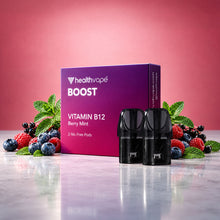
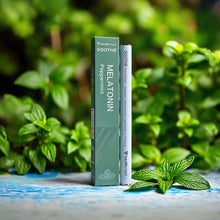
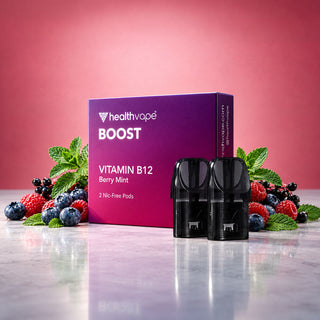
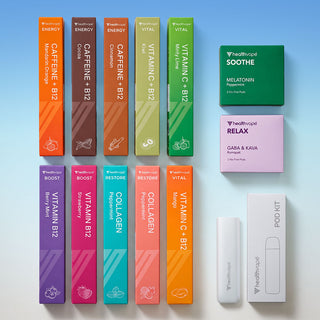
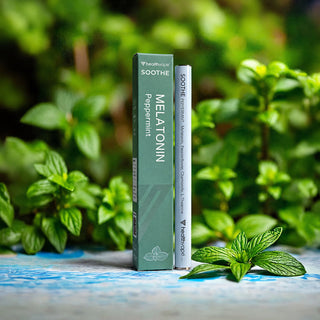
Ingredients: Varies by product — common ingredients include Vitamin B12, melatonin, caffeine, chamomile extract, L-theanine, GABA, plus a base liquid (usually VG) and food-grade flavorings.
These products are formulated specifically for inhalation. The ingredients themselves are well-studied compounds that have been consumed orally for decades. The difference is the delivery route — inhalation vs. digestion.
What the Research Says (and Doesn't Say)
What we know:
- No nicotine = no nicotine addiction. Nicotine is the addictive compound in cigarettes and traditional vapes. Products without nicotine don't carry that addiction risk.
- No combustion = no tar, no carbon monoxide. Vaping (both nicotine and nicotine-free) heats liquid to produce aerosol. It doesn't burn anything. The harmful byproducts of combustion (tar, carbon monoxide, thousands of chemicals) aren't present.
- PG and VG have decades of safety data for ingestion. Both are FDA-approved food additives used in medications, cosmetics, and food products.
- Individual ingredients (B12, melatonin, chamomile, etc.) are well-studied. These compounds have established safety profiles when consumed orally.
What we don't know (yet):
- Long-term inhalation effects. The nicotine-free vitamin inhaler category is roughly 7–8 years old. We don't have 20- or 30-year studies on daily use of inhaled VG with vitamin compounds. We may never have them — these studies take decades and significant funding.
- Individual variation. People with respiratory conditions (asthma, COPD, etc.) may react differently to inhaled aerosols. If you have a pre-existing lung condition, consult your doctor.
- Flavor compound interactions. While individual flavoring compounds are food-safe, the behavior of heated flavor compounds when inhaled is an area of ongoing research.
The Red Flags: What to Avoid
Not all nicotine-free vapes are created equal. Here's what should make you walk away:
| Red Flag | Why It Matters |
|---|---|
| "Proprietary blend" with no ingredient list | If a brand won't tell you what's in the product, don't inhale it. |
| No lab testing | Third-party testing verifies what's in (and not in) the product. Brands that skip this are cutting corners. |
| Wild health claims | "Cures anxiety," "treats insomnia," "helps you quit smoking" — any product making therapeutic claims is either lying or violating FDA regulations. |
| Unknown manufacturing origin | Where is it made? Under what standards? Reputable brands disclose this. |
| Vitamin E acetate | The compound linked to the 2019 EVALI crisis. It should never be in any vape product. Legitimate brands test for and exclude it. |
| Diacetyl | A flavoring compound linked to "popcorn lung" when inhaled in industrial settings. Most reputable vape brands have eliminated it. |
How to Evaluate a Product Yourself
Since regulation in this space is still evolving, informed consumers are their own best regulators. Here's the evaluation framework:
Step 1: Read the full ingredient list
Every ingredient should be listed. If you can't find it on the website or packaging, contact the brand and ask. If they won't tell you, don't buy it.
Step 2: Check for lab testing
Look for certificates of analysis (COAs) from independent labs. These verify ingredient contents and screen for contaminants.
Step 3: Research the brand
How long have they been around? Where are they based? Do they have real customer reviews (not just testimonials on their own site)? Brands with track records are lower risk.
Step 4: Start small
If you're trying a new product, start with a single device rather than buying in bulk. See how your body responds.
Step 5: Listen to your body
Any coughing, irritation, or unusual reaction means stop. This applies to any inhaled product.
The Honest Take
Here's the most truthful thing anyone in this industry can say: inhaling anything other than clean air carries some level of unknown risk. That's true for nicotine-free vapes, nicotine vapes, incense, scented candles, air fresheners, and living next to a highway.
What nicotine-free vitamin inhalers don't have: nicotine, tobacco, tar, carbon monoxide, or the thousands of combustion byproducts found in cigarettes.
What they do have: well-known ingredients (vitamins, botanicals, amino acids) delivered through a base liquid (typically VG) via a heated device.
Whether that trade-off makes sense for you is a personal decision. We think the best approach is transparency — which is why brands like HealthVape publish their ingredient lists and invest in product quality.
If you want to explore what's available, browse the full product lineup. And if you want to understand why people choose these products in the first place, read our piece on the psychology of habit replacement.
Your body, your call. Just make it an informed one.


